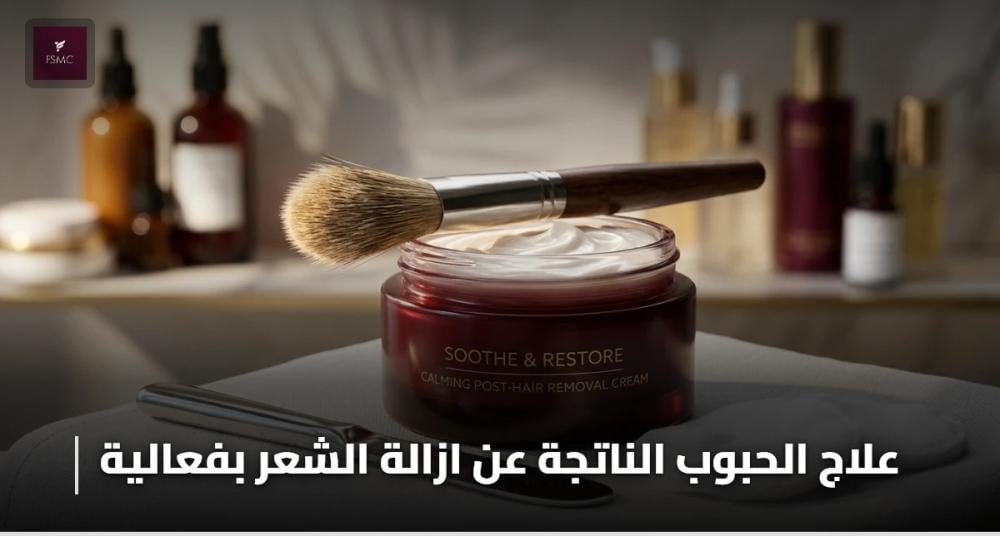
Imagine you've finished hair removal and expected smooth skin, but instead you find annoying red bumps covering the area. This is something many people suffer in silence. Treating bumps caused by hair removal isn't complicated if you understand the underlying cause and find the right solution for your specific skin type.
In a specialized dermatology clinic like those offered by the First Specialist Medical Clinics Complex, doctors deal with these cases daily and provide customized treatment plans for each skin type. Before you can find a solution, you need to understand what's happening beneath the surface of your skin.
Causes of pimples after hair removal
The skin is not merely an outer layer, but a living system that is affected by any external intervention. When a hair is pulled from the root or cut close to the surface, the hair follicles and the upper layers of the skin are subjected to sudden pressure and irritation. The body responds to this in different ways depending on each person's nature, and this is when pimples begin to appear in various forms, each with its own specific cause.
What's striking here is that many people misdiagnose the type of acne they have, using a solution for a different problem and then wondering why things haven't improved. A correct diagnosis is half the cure.
1. Folliculitis
- This condition occurs when bacteria enter the open hair follicle immediately after hair removal.
- They appear as small pimples surrounded by redness, and sometimes contain pus in their center.
- Lint and unsterilized tools are among the main reasons that worsen the condition.
- Oily skin is more prone to this type of inflammation compared to dry skin.
- Heat and humidity after the session accelerate the growth of bacteria on the skin's surface.
Book a consultation now for an examination of active acne.
2. Allergic dermatitis
- Some types of wax or creams used for hair removal contain allergenic substances.
- Allergic inflammation appears within a few hours of the session in the form of widespread redness and small bumps.
- Allergic body rashes are sometimes accompanied by severe itching and a burning sensation.
- Perfumes and synthetic dyes in hair removal products are the prime suspects in many cases.
- Using expired products doubles the risk of an allergic reaction.
3. Ingrown hairs
- This particular condition is the most common and causes the most visually bothersome pimples.
- This occurs when the growing hair bends back into the skin instead of emerging to the surface.
- People with curly and coarse hair are more prone to this problem due to the nature of hair growth.
- They appear as hard bumps with a visible hair underneath, sometimes just under the skin.
- These types of pimples that appear after hair removal can turn into dark pigmentation if not treated properly.
Tips to reduce skin irritation and breakouts
- Avoid hot water and steam on the treated area for at least 24 hours after the session.
- Apply a lightweight, fragrance-free moisturizer immediately after hair removal to soothe the skin.
- Wear loose cotton clothing after the session to reduce friction on sensitive skin.
- Avoid alcohol-based products completely on the first day as they dry out and irritate the skin.
- Do not touch the area with unclean hands to avoid transferring bacteria to the open pores.
- Dry the area with a clean, soft towel using a gentle patting motion, not rubbing.
- Make sure to sterilize the tools used before each session, whether at home or at the beauty center.
- Avoid direct sun exposure after the session as the skin will be highly sensitive.
Ways to get rid of pimples after hair removal
When pimples appear despite all precautions, the natural question is: what's the right step now? The truth is, treating pimples resulting from hair removal depends largely on identifying the type and stage of the pimple. Not all pimples are treated the same way, and it's a common mistake to apply the first product you find in the pharmacy without thinking.
It's always best to start with less invasive options and gradually move to stronger treatments if the condition doesn't improve. However, if the acne persists for more than two weeks or spreads, then a doctor becomes the only option.
Use cold and warm compresses
- Applying a cold compress in the first few hours reduces redness, tightens pores, and soothes burning.
- Apply the compress for 10 minutes with a break, then repeat. Do not apply it continuously.
- The warm compress is then used to soften the hard lump and encourage the trapped hair to come out.
- Do not apply ice directly to the skin; instead, wrap it in a soft cloth before application.
- Repeat this step twice daily until the redness gradually fades.
Moisturize the skin using medical moisturizers
- Choose moisturizers that contain soothing ingredients such as aloe vera, panthenol, or niacinamide.
- Avoid heavy, oil-based moisturizers as they can clog pores and worsen acne.
- Apply moisturizer at least twice a day, even when you are not in the post-hair removal period.
- Medical moisturizers containing hyaluronic acid keep the skin hydrated without weighing it down.
- Continued moisturizing reduces the appearance of pimples after hair removal in the long run.
Treating acne with effective medical products
- Mild hydrocortisone creams help relieve allergic inflammation and soothe redness.
- Products containing salicylic acid treat blocked body acne and prevent the buildup of dead skin cells.
- Apply the product only to the affected area, not to the surrounding healthy skin, to avoid further irritation.
- Removing skin pigmentation caused by acne requires medically prescribed lightening creams.
- Do not use any strong treatment product without consulting a dermatologist, as irritated skin is more sensitive.
Exfoliate the skin with suitable products
- Gentle exfoliation prevents the buildup of dead cells that trap hair beneath the surface.
- Use exfoliating products containing gentle acids like lactic acid instead of harsh physical scrubs.
- Once or twice a week is sufficient, and over-exfoliating causes more irritation than the original problem.
- Avoid exfoliation in the first few days immediately after hair removal as the skin is still sensitive.
- After exfoliating, always apply a soothing moisturizer to restore balance to the skin.
How can you protect yourself from pimples after hair removal?
- Choose a hair removal method that suits your skin type; not all methods are suitable for sensitive skin.
- Gently exfoliate your skin two days before your session to remove dead skin cells and facilitate hair removal.
- Make sure that the place you go to uses clean and sterilized materials in every session.
- Avoid strenuous exercise and excessive sweating in the 24 hours immediately following the session.
- Test any new product on a small area before applying it to the entire treated area.
- Allow sufficient time between sessions to give your skin ample time to recover.
- Drink plenty of water and maintain a balanced diet; healthy skin is less prone to irritation.
- Speak to a dermatologist before starting any new hair removal method if your skin is prone to sensitivity.
People prone to developing pimples after hair removal
- People with sensitive skin whose skin reacts easily to any external stimulus
- People with coarse, curly hair who frequently suffer from ingrown hairs
- People with eczema or psoriasis because their skin is less able to heal quickly.
- Those who use the razor or wax method themselves without sufficient mastery of the correct technique
- People who live in hot and humid environments where bacteria multiply more rapidly
- Those who wear tight clothing after the sessions, which increases friction on the irritated skin.
- People who neglect post-hair removal skincare steps and expect effortless results
Frequently asked questions about treating pimples resulting from hair removal
Are pimples after hair removal dangerous?
Most pimples that appear after hair removal are not serious and disappear on their own within a few days with proper care. However, if they develop into large cysts, spread to large areas, or are accompanied by fever, this is a sign that requires immediate medical attention. Body pimples that leave dark pigmentation also require specialized medical intervention.
How long does it take to treat pimples resulting from hair removal?
This depends entirely on the type of pimple and its cause. Simple pimples resulting from hair removal may only need a week to heal with proper care and appropriate moisturizers. Chronic cases related to ingrown hairs or skin pigmentation may take several weeks with a treatment protocol prescribed by a specialist. Removing skin pigmentation caused by older pimples requires a longer timeframe.
When should you see a doctor for body acne treatment?
See a doctor immediately if you notice body acne increasing instead of decreasing, or if it is accompanied by severe pain or significant swelling. Also, consult a doctor if you leave dark spots untreated after each treatment session, as these spots will accumulate over time. Only a dermatologist has the diagnostic tools to determine whether the acne is caused by a bacterial infection, an allergy, or ingrown hairs, and based on that, they can develop the appropriate treatment plan.
Treating post-hair removal acne isn't simply a matter of applying a random cream to the skin; it requires a proper understanding of the cause and a carefully chosen solution. Prevention is much easier than cure, but when acne does appear, the wisest course of action is not to wait until the condition worsens. At the First Specialist Medical Clinics Complex, you'll find a comprehensive dermatology clinic with a team of specialist doctors who will accurately diagnose your condition and develop a treatment protocol specifically tailored to your skin type. Contact us today and don't let acne steal your comfort and confidence in your appearance.